Think of your media kit as your digital spotlight, the one doc that turns “Cool feed!” into “Let’s collab!”
If you’re an influencer, content creator, or digital personality, a media kit is one of the most valuable assets you can build. It’s your professional snapshot, a single document (or page) that tells brands exactly who you are, who your audience is, and why they should work with you. In this guide, you’ll learn what a media kit is, why it matters, how to make one that wins deals, and what real brands are actually looking for.
By the end, you’ll walk away with a clear structure, real examples (including beauty and fitness niches), and the confidence to pitch yourself like a pro.
Why Read This?
- You’ll understand what a media kit is and why brands care.
- You’ll learn exactly what to include and how to organize it.
- You’ll see examples that work (not just theory).
- You’ll be able to create your own media kit that gets brand deals.
What Is a Media Kit?
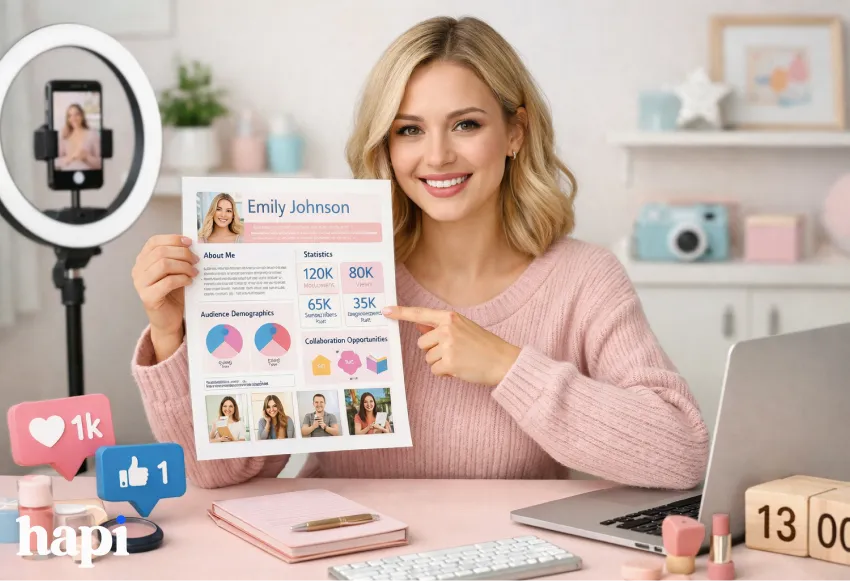
A media kit (sometimes called an influencer kit) is like your influencer résumé and sales deck rolled into one. It’s a document that shows your stats, audience insights, content performance, and offerings — everything a brand needs to decide whether working with you makes sense.
👉 Quick distinction:
Media Kit: Helps sell your creator services to brands.
Press Kit: Helps get you coverage in media outlets.
In today’s creator economy, brands expect this. A neat, professional media kit signals you’re serious — and makes it easy for them to say “yes.”
Why Influencers Need a Media Kit?
Influencer marketing is booming. In 2025, creator ad spending is projected to hit $37 billion, growing faster than the broader media industry — and brands are leaning into this trend hard.
Here’s what a strong media kit gives you:
Top Benefits for Creators
- Looks professional. You’ll stand out from creators who send generic emails.
- Saves time. All your stats, offerings, and contact info are in one place.
- Clarifies expectations. Brands know exactly what you offer and how you price it.
- Boosts negotiation power. With clear performance data and rates, you’re stronger in negotiations.
Brands want creators who communicate clearly and professionally. Your media kit does just that — it reduces friction and helps close deals faster.
What to Include in Your Influencer Media Kit
Use this structured checklist to build a kit brands love. Organize it in scannable sections with clear headlines.
1. Who You Are (Brand Snapshot)
- Your name, platforms you’re active on, and niche
- A short bio (authentic and concise — 50–100 words)
- Your personal brand story — what you stand for and why your audience follows you
2. Audience Insights & Demographics
Brands care who your audience is — not just how many followers you have. Include:
- Follower count on each platform
- Age ranges, gender, location breakdowns
- Interests and behaviors of your audience
Audience Data at a Glance — Example Table (for brand partners)
| Metric | What It Shows | Why Brands Care |
| Follower count | Total reach | Indicates potential visibility |
| Engagement rate | How much your audience interacts | Predicts impact and ROI |
| Age breakdown | Audience age groups | Helps brand targeting |
3. Performance Metrics That Matter
Brands pay for impact. These are the numbers they care about most:
- Engagement rate — likes, comments, shares relative to followers
- Reach and impressions — how many unique users saw your content
- Video views and watch time (especially for TikTok/YouTube)
- Click-through rates and link interactions.
Pro tip: Brands value engagement more than massive follower counts, especially for micro-influencers.
4. Offerings & Deliverables
The Offerings & Deliverables section is one of the most critical parts of your media kit because it shows brands exactly what you can create and how they can leverage your audience. It answers the question: “If we work with this influencer, what do we actually get?”
Brands want clarity. If you leave this vague, they may hesitate to reach out or negotiate lower rates. Here’s how to structure it:
1. Social Media Content
This is the core of most influencer collaborations. Include platform-specific offerings with examples:
- Instagram
- Feed posts: static photos, carousel posts
- Reels: short, engaging video content
- Stories: polls, swipe-ups, and ephemeral content
- Example (Beauty): “Skincare tutorial Reel highlighting product usage with 3-step morning routine.”
- Example (Fitness): “Workout demonstration Reel showing 5-minute HIIT routine featuring branded apparel.”
- Feed posts: static photos, carousel posts
- TikTok
- Short-form video content (15–60 seconds)
- Trending sound + hashtag integration
- Example (Beauty): “Quick makeup tutorial using brand’s new palette.”
- Example (Fitness): “30-second challenge featuring the brand’s protein shake.”
- Short-form video content (15–60 seconds)
- YouTube / Shorts
- Longer tutorials, vlogs, or product reviews
- Shorts: 30–60 seconds, optimized for high engagement
- Example (Beauty): “Full tutorial video reviewing three skincare products with call-to-action link.”
- Example (Fitness): “7-minute HIIT session with brand’s workout equipment, linking to affiliate page.”
- Longer tutorials, vlogs, or product reviews
2. Sponsored Campaigns
- Single campaign posts (e.g., 1–3 posts per platform)
- Multi-post campaigns (bundle posts, stories, and reels for higher impact)
- Example (Beauty): “Launch campaign for a new lip gloss, 2 posts + 3 stories + 1 Reel.”
- Example (Fitness): “7-day fitness challenge featuring branded protein bars — posts + stories + Shorts.”
3. Product Features & Reviews
Brands love seeing authentic content that showcases real use and results. Include:
- Reviews: in-feed or video testimonials
- Tutorials: step-by-step usage guides
- Demo videos: unboxing or ‘how to use’ clips
- Example (Beauty): “Tutorial demonstrating a 5-step evening skincare routine using brand products.”
- Example (Fitness): “Protein shake taste test + nutritional highlights in a short video.”
4. Affiliate / Promotional Content
If you participate in affiliate programs or sales-driven campaigns, list the deliverables:
- Affiliate links embedded in posts or bio
- Promo codes shared via Stories, TikToks, or newsletters
- Example (Beauty): “10% off code shared in Reel caption and Instagram Story swipe-up.”
- Example (Fitness): “Affiliate code shared in Shorts video + pinned post description.”
5. Event Appearances / Takeovers
- Live events, webinars, or brand store appearances
- Social media account takeovers for a day or campaign period
- Example (Beauty): “Instagram takeover showing behind-the-scenes at brand launch event.”
- Example (Fitness): “Live Q&A session on TikTok, demonstrating branded fitness equipment.”
6. Visual & Media Assets
Provide brands with ready-to-use content if included in partnership:
- High-quality photos, b-roll videos, or brand-focused graphics
- Example (Beauty): “High-resolution still images of product in use for social posts.”
- Example (Fitness): “Short clips for brand’s social channels showing exercises with equipment.”
7. Long-term Partnerships & Ambassadorships
Highlight if you offer recurring collaborations:
- Monthly or quarterly campaign packages
- Consistent content across multiple platforms
- Example (Beauty): “3-month ambassador program featuring seasonal product launches.”
- Example (Fitness): “Ongoing fitness content partnership with branded apparel company for weekly workouts.”
5. Pricing & Packages
Pricing is tricky — but transparency builds trust.
How to structure pricing:
- Tiered packages (Starter / Mid / Premium)
- Pricing per deliverable
- Add‑ons: usage rights, exclusivity, long‑term partnerships
Example Influencer rate card sample (simple):
| Deliverable | Typical Rate |
| Single feed post | $400–$1,200 |
| Reel/Shorts video | $800–$2,500 |
| Multi‑post campaign | $1,500–$6,000 |
You can list ranges rather than exact prices until you customize for a brand.
How to Make Your Media Kit — Step by Step
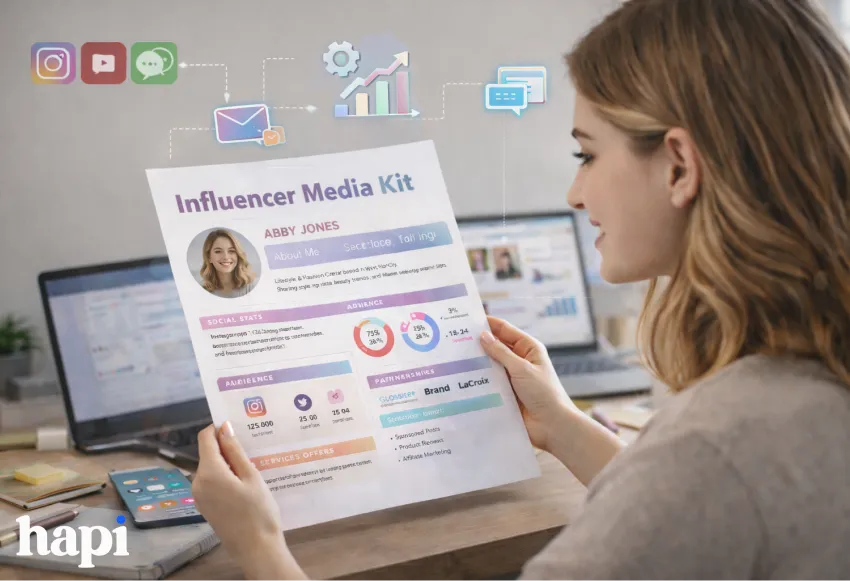
Follow this simple process to create a polished kit.
Step 1 — Choose Your Format
- PDF — easy to send via email
- Web page — great for SEO and discoverability
- Digital folder (Notion, Drive) — good for lots of visual assets.
Step 2 — Collect Proof
Brands want evidence:
- Recent analytics screenshots
- Performance figures for past partnerships
- Testimonials or short brand quotes
Always use recent data — outdated stats can hurt your credibility.
Step 3 — Write for Brands
Write in a way that answers “Why should we hire you?”:
- Be concise
- Use headings and bullets
- Highlight results, not just activity
For example: “Recent fitness campaign reached 150K views, delivered a 6.5% engagement rate, and drove 950 link clicks in 14 days.”
Step 4 — Design It
A clean design keeps brands reading longer.
- Use consistent colors and fonts
- Plenty of white space
- Bullet lists over dense paragraphs
- Clear section breaks
📸 Real Examples That Work (Beauty & Fitness)
Beauty Creator Example
- Niche: skincare and makeup tutorials
- Platforms: Instagram (80K), TikTok (60K)
- Engagement: ~5% average engagement
- Offerings: product demos, beauty hauls, tutorial Reels
- Results: Featured brand launch saw 45K views + 12K saves.
This showcases not just reach — but real interaction.
Fitness Creator Example
- Niche: HIIT workouts and wellness tips
- Platforms: TikTok (100K), YouTube Shorts (70K)
- Engagement: ~7% average
- Offerings: workout videos, weekly challenges, brand collabs
- Results: Recent apparel campaign delivered 820 conversions through UTM links.
Media Kit Comparison Table (example)
| Type | Core Metrics | Deliverables | Highlight |
| Beauty | Engagement, saves, demo vids | Reels, Stories | Product demos + tutorial impact |
| Fitness | Views + conversions | Shorts, routines | Performance challenge series |
❌ Common Mistakes to Avoid
Avoid these pitfalls:
- 🌪 Outdated metrics
- 📉 No audience breakdown
- 📝 Walls of text with no bullets
- 💸 “Depends on budget” pricing
- 📎 Broken links or missing contact info
Conclusion
Your media kit is your backstage pass into real brand deals. When it’s clear, professional, and data‑driven — brands trust you more, reply faster, and pay better. Start with the basics, update often, and iterate as your content evolves.
Tip: Update your kit every quarter or after big campaign wins so you always put your best self forward.
FAQ
1. How to find a media kit?
You can find media kits online through influencer platforms, template websites, or creator communities. Many influencers share examples on Canva, Notion, or their personal websites. Templates are also widely available for free or paid use to get started quickly.
2. Who needs a media kit?
Creators, influencers, content marketers, and anyone looking to work with brands or secure sponsorships need a media kit. Even micro-influencers benefit — it makes you look professional and helps brands quickly understand what you offer.
3. How to make a media kit?
Start by collecting your stats, audience demographics, past campaign results, and content examples. Organize this information into a clear layout using PDF, Notion, or a web page. Include your bio, offerings, pricing/packages (optional), and contact info. Keep it concise, visually appealing, and updated regularly.
4. What is a media kit?
A media kit is your professional snapshot for brands. It summarizes who you are, who your audience is, your engagement metrics, the types of content you create, and what deliverables you can offer. Think of it as your resume + pitch deck for collaborations and sponsorships.