
Guessing what your customers want is expensive, good data is free (if you know where to look).
If you run a small business or do marketing, you’ve probably asked yourself: What do my customers really want? The good news is, you don’t need a big budget to find out. Today, there are powerful market research tools that give you real data for free.
In this guide, you’ll learn:
- What market research tools actually do
- Why free tools are often enough
- 10 free (and freemium) tools you can start using today
- How to turn data into smarter decisions
By the end, you’ll know exactly how to stop guessing and start using real insights to grow your business.
What Are Market Research Tools?
Market research tools help you collect and understand data about your customers, competitors, and industry. In simple terms, they show you what people want, how they behave, and what’s trending.
These tools come in different types. Some focus on surveys, others on search trends, and some on website analytics.
Here’s what they help you do:
- Collect customer opinions
- Track market trends
- Analyze competitors
- Understand user behavior
Most successful businesses rely on data instead of gut feelings. That’s because data helps you make decisions based on real behavior, not assumptions.
Why Free Market Research Tools Are Enough
Many people think good research tools cost hundreds of dollars. That’s not true anymore.
Free and freemium tools are powerful because they often use the same data sources as paid tools. The difference is usually limits, not quality.
Why free tools work so well:
- Low risk—you don’t need to invest upfront
- Easy to use (perfect for beginners)
- Scalable as your business grows
- Fast access to real-time data
For most small businesses, free tools provide more than enough insight to make smart decisions. You only need to upgrade when you outgrow them.
10 Free Market Research Tools for Accurate Consumer Data
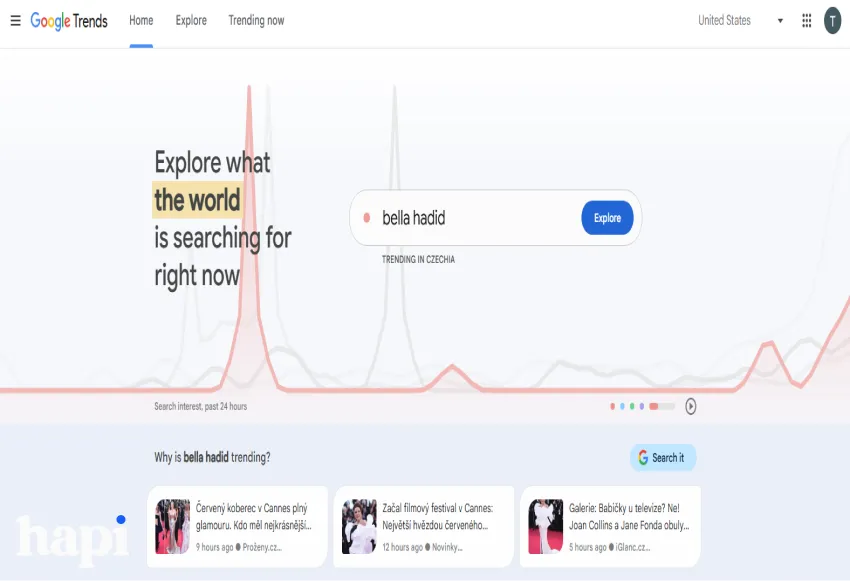
1. Google Trends
Tracks what people are searching for in real time. Great for spotting trends and timing your campaigns.
2. Google Analytics
Shows how users behave on your website, what they click, where they come from, and what keeps them engaged.
3. SurveyMonkey (Free Plan)
Lets you collect direct feedback from customers using simple surveys.
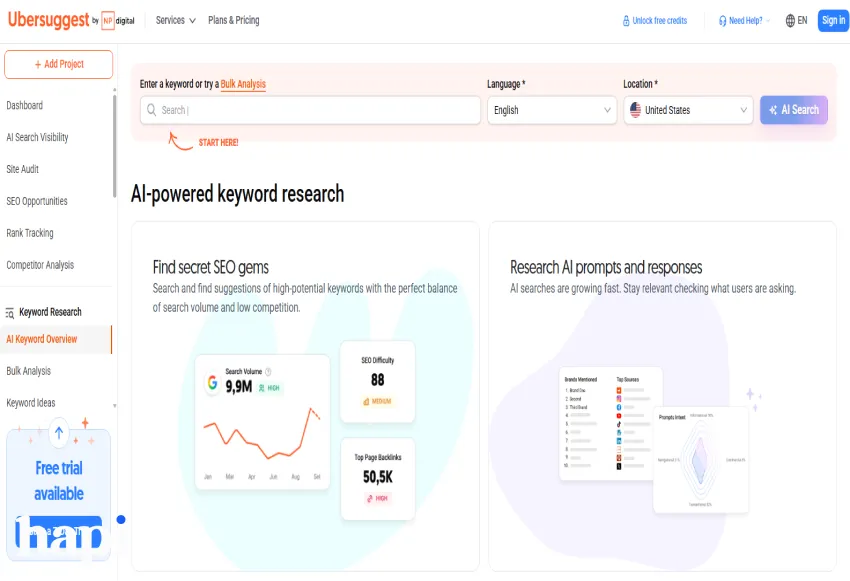
4. Ubersuggest
Neil Patel’s market tool helps you find keywords, analyze competitors, and discover content ideas.
5. AnswerThePublic
Shows real questions people search for, perfect for understanding intent.
6. Statista (Free Data)
Provides reliable statistics and industry data for deeper insights.
7. Think with Google
Shares consumer trends and marketing insights backed by Google data.
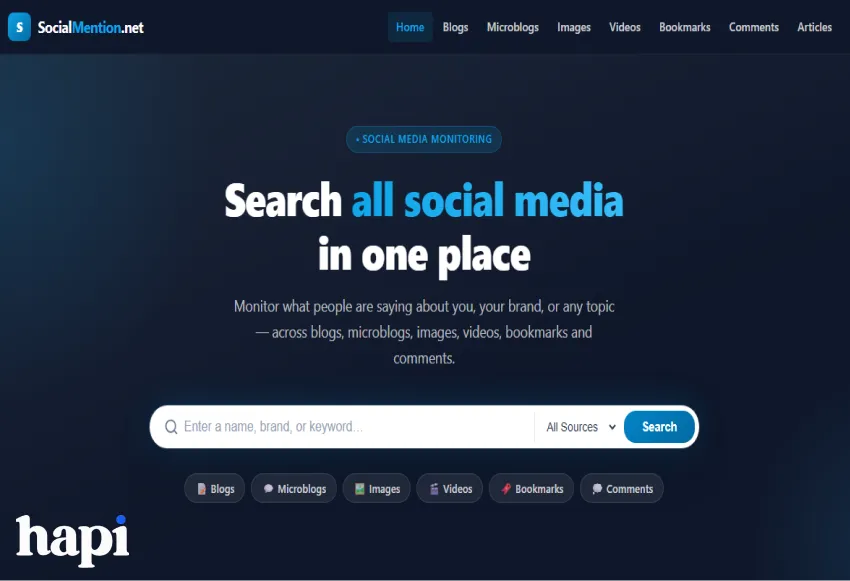
8. Social Mention
Tracks what people say about brands online and measures sentiment.
9. Pew Research Center
Offers trustworthy data on demographics and social trends.
10. Typeform (Free Plan)
Creates engaging surveys that people actually enjoy completing.
Tool Comparison Table
| Tool | Primary Use | Best For | Free Limitations | Data Type |
| Google Trends | Trend analysis | Seasonal demand | Limited deep data | Quantitative |
| Google Analytics | Website behavior | Traffic insights | Needs setup | Quantitative |
| SurveyMonkey | Surveys | Customer feedback | Limited responses | Qualitative |
| Ubersuggest | SEO research | Keywords & competitors | Daily limits | Quantitative |
| AnswerThePublic | Search insights | Content ideas | Limited searches | Qualitative |
| Statista | Industry data | Market stats | Partial access | Quantitative |
| Think with Google | Trends & insights | Strategy ideas | No raw export | Qualitative |
| Social Mention | Social listening | Brand sentiment | Accuracy varies | Qualitative |
| Pew Research | Consumer data | Demographics | Static reports | Quantitative |
| Typeform | Surveys | Engagement | Response limits | Qualitative |
How to Choose the Right Market Research Tool
Not all tools are built for the same job. Choosing the right one depends on your goal.
Follow this simple process:
- Define your goal (traffic, feedback, trends)
- Choose the right tool category
- Check data quality
- Test multiple tools for better accuracy
If you want customer opinions → use surveys. If you want behavior → use analytics tools.
Keep it simple. You don’t need 10 tools, just the right 2 or 3.
Common Mistakes to Avoid
Even the best tools won’t help if you use them the wrong way. Many beginners make simple mistakes that lead to bad decisions.
Here are the most common ones:
- Relying on only one tool
No single tool gives you the full picture. For example, Google Trends shows interest—but not why people are interested. - Ignoring the context behind data
Data without context can be misleading. A spike in searches might be due to news, not actual demand. - Not validating your findings
Always double-check your insights using another tool or method. If two sources say the same thing, it’s more reliable. - Overcomplicating the process
You don’t need advanced analytics to start. Simple insights often lead to the biggest wins. - Focusing only on numbers, not people
Data represents real people. If you ignore their needs, your strategy won’t work. - Collecting data but never using it
This is more common than you think. Many businesses gather data and do nothing with it. - Chasing trends blindly
Just because something is trending doesn’t mean it fits your business. Always align trends with your audience.
Quick tip:
Think of data as a guide, not a final answer. It points you in the right direction, but you still need to think critically.
How to Turn Data Into Action
Collecting data is easy. Using it effectively is where most people struggle.
The goal isn’t just to gather information, it’s to make better decisions based on that information.
Step 1: Look for patterns, not just numbers
Instead of focusing on a single data point, look for trends over time.
For example:
- Are certain products popular every season?
- Do users drop off at the same page?
Patterns tell a story. Numbers alone don’t.
Step 2: Turn insights into simple ideas
Once you spot a pattern, ask yourself: What can I do with this?
Examples:
- High search volume → create content around that topic
- Low engagement → improve your page design
- Negative feedback → fix customer pain points
Keep your ideas simple and actionable.
Step 3: Test before making big decisions
Don’t go all in right away. Test your ideas on a small scale first.
Use a bullet list here:
- Run a small campaign
- Test a new product idea
- Try a different headline
- A/B test landing pages
Testing reduces risk and helps you learn faster.
Step 4: Measure results
After testing, check what worked and what didn’t.
Ask:
- Did engagement improve?
- Did sales increase?
- Did users stay longer?
If something works, double down on it. If not, adjust and try again.
Step 5: Repeat the process
Market research is not a one-time task. It’s ongoing.
The more you test and learn, the better your decisions become over time.
Personal Experience:
A small online store noticed through Google Trends that interest in eco-friendly products was growing. Instead of changing everything, they tested one product line.
The result? That product became their best-seller within months.
The key wasn’t the data, it was how they used it.
FAQ: Market Research Tools
What are the best free market research tools?
Google Trends, Google Analytics, Ubersuggest, and SurveyMonkey are among the best for beginners.
How do small businesses do market research?
They use free tools, surveys, and customer feedback to understand their audience without spending much.
Are free market research tools accurate?
Yes, especially those powered by large platforms like Google. Accuracy depends on how you interpret the data.
What is the easiest tool for beginners?
Google Trends and SurveyMonkey are simple and easy to start with.
How can I analyze customer behavior for free?
Use Google Analytics to track how users interact with your website.
What tools help with competitor analysis?
Ubersuggest and similar tools show competitor keywords, traffic, and strategies.
Conclusion
Market research doesn’t have to be expensive or overwhelming. With the right tools, you can understand your customers, spot trends, and make smarter decisions, without spending a dollar.
Start small. Pick one or two tools from this list and begin exploring your data. The more you use these tools, the more confident you’ll become in your decisions.
I’ve personally seen how even simple tools like Google Trends can change the way you think. At one point, I relied on guesswork for content ideas. Some worked, most didn’t. But once I started using real data, the difference was clear, better engagement, better results, and far less wasted effort.
That’s the real power of market research tools. They don’t just give you data, they give you direction.
The businesses that win aren’t guessing, they’re paying attention.